Imagine this: you’re cranking out pizzas on a scorching stone, and one quick laser zap tells you it’s exactly 700°F. That’s the kind of precision these six infrared thermometers bring to your toolkit. You’ll see why models like the Soonkoda GM50 and TempPro TempScan earn their keep, from adjustable emissivity to ±1.5°F accuracy. Stick around to find your perfect match.
| Digital Infrared Thermometer for Cooking BBQ Pizza |  | Top Rated | Measurement Range: -58°F to 932°F (-50°C to 500°C) | Distance-to-Spot Ratio: Not specified | Response Time: Approximately 10 seconds | VIEW LATEST PRICE | Read Our Analysis |
| TempPro TempScan Infrared Thermometer Gun for Cooking |  | Most Versatile | Measurement Range: -58°F to 1022°F | Distance-to-Spot Ratio: 16:1 | Response Time: 0.5 seconds | VIEW LATEST PRICE | Read Our Analysis |
| TempPro TempScan 2-in-1 Infrared Thermometer Gun |  | Best 2-in-1 | Measurement Range: -58°F to 1022°F (IR), -58°F to 572°F (probe) | Distance-to-Spot Ratio: Not specified | Response Time: Approximately 0.5 seconds | VIEW LATEST PRICE | Read Our Analysis |
| Etekcity Infrared Thermometer Laser Temperature Gun 774 |  | Easiest to Use | Measurement Range: -58°F to 842°F (-50°C to 450°C) | Distance-to-Spot Ratio: 12:1 | Response Time: 0.5 seconds | VIEW LATEST PRICE | Read Our Analysis |
| TempPro TempScan Infrared Thermometer Gun |  | Best for Pros | Measurement Range: -58°F to 1022°F | Distance-to-Spot Ratio: 12:1 | Response Time: Under 0.5 seconds | VIEW LATEST PRICE | Read Our Analysis |
| Klein Tools IR1 Infrared Thermometer Laser Gun | 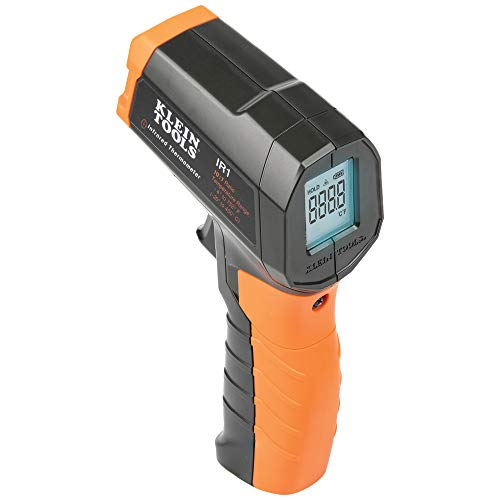 | Toughest Build | Measurement Range: -4°F to 752°F (-20°C to 400°C) | Distance-to-Spot Ratio: 10:1 | Response Time: 0.5 seconds | VIEW LATEST PRICE | Read Our Analysis |
More Details on Our Top Picks
Digital Infrared Thermometer for Cooking BBQ Pizza
If you’re hunting for a top rated tool to nail surface temps on steaks, pizza stones, or griddle tops without poking holes in your food, the Soonkoda GM50 deserves a spot on your counter. This handheld gun reads from -58℉ to 932℉, with a crisp backlit LCD for low light. Its emissivity is preset at 0.95, perfect for most organic materials and painted surfaces. Just remember: shiny metals might need an adjustment. You get data hold and scan features by pulling the trigger, plus an auto power off after 8 seconds to save those included AAA batteries. It’s compact, durable, and certified to CE standards.
- Measurement Range:-58°F to 932°F (-50°C to 500°C)
- Distance-to-Spot Ratio:Not specified
- Response Time:Approximately 10 seconds
- Emissivity:Fixed at 0.95
- Power Source:2 AAA batteries (included)
- Display Features:Backlit LCD, data hold, scan icon, hold icon
- Additional Feature:Backlit low-light display
- Additional Feature:Data hold function
- Additional Feature:Auto power-off after 8 seconds
TempPro TempScan Infrared Thermometer Gun for Cooking
You need a thermometer that handles everything from searing steak to checking your car’s AC vents? Then the TempPro TempScan is your all in one tool. It uses 2 laser targeting and adjustable emissivity (0.1 to 1.0) for accurate reads on different surfaces, from shiny pans to matte grill grates.
Here’s what it delivers:
- Range: -58°F to 1022°F, with a 16:1 distance to spot ratio.
- Speed: You get a reading in just 0.5 seconds.
- Tracking: Use MAX, MIN, and AVG functions to monitor heat fluctuations.
It’s non contact and safe for high heat objects. With a 1.5% accuracy rating and over 1,100 positive reviews (4.5 stars), it’s a solid, versatile pick. You’ll even find it ranked #1 in Lab Digital Thermometers. Compact, durable plastic build, too.
- Measurement Range:-58°F to 1022°F
- Distance-to-Spot Ratio:16:1
- Response Time:0.5 seconds
- Emissivity:Adjustable 0.1-1.0
- Power Source:2 AAA batteries (included)
- Display Features:Backlit digital display, MAX/MIN/AVG functions
- Additional Feature:MAX/MIN/AVG data tracking
- Additional Feature:Low battery indicator
- Additional Feature:Non-contact safe scanning
TempPro TempScan 2-in-1 Infrared Thermometer Gun
The TempPro TempScan 2-in-1 Infrared Thermometer Gun is for anyone who wants both surface and probe readings in one device. You’ll scan your pizza stone or HVAC vent from a distance, thanks to adjustable emissivity. But you’ll also plunge the stainless steel probe into a steak or candy for internal accuracy. It reads from -58°F to 572°F on the probe, up to 1022°F on infrared. Motion sensing wakes it when you pick it up; it sleeps when set down. The large backlit display and magnet for storage make it a solid kitchen and workshop companion.
- Measurement Range:-58°F to 1022°F (IR), -58°F to 572°F (probe)
- Distance-to-Spot Ratio:Not specified
- Response Time:Approximately 0.5 seconds
- Emissivity:Adjustable (not specified range)
- Power Source:2 AAA batteries (included)
- Display Features:Large backlit display, motion sensing on/off, °F/°C switch
- Additional Feature:Built-in meat probe
- Additional Feature:Motion sensing wake/sleep
- Additional Feature:Hanging hole and magnet
Etekcity Infrared Thermometer Laser Temperature Gun 774
Easiest to use isn’t just a claim here—it’s built into the design of the Etekcity Lasergrip 774. You’ll appreciate the single-button operation: just hold the trigger, scan the surface, and you get your reading in 0.5 seconds. The large backlit LCD screen makes results visible even in dim lighting, perfect for checking your pizza oven or BBQ without squinting.
And versatility? You name it. This gun handles everything from -58°F to 842°F with a 12:1 distance-to-spot ratio. That means you can measure from about 14 inches away and still get accurate, ±2% readings. Adjustable emissivity (0.1 to 1.0) lets you handle different surfaces, whether it’s a griddle, engine part, or bath water. Auto-off saves batteries too.
- Measurement Range:-58°F to 842°F (-50°C to 450°C)
- Distance-to-Spot Ratio:12:1
- Response Time:0.5 seconds
- Emissivity:Adjustable 0.1-1.0
- Power Source:2 AAA batteries (included)
- Display Features:Large backlit LCD, maximum temperature display
- Additional Feature:Single-button operation
- Additional Feature:Ergonomic hand-feel design
- Additional Feature:FDA and UL compliant
TempPro TempScan Infrared Thermometer Gun
Pros trust precise tools, and you’ll get that with the TempPro TempScan infrared thermometer gun. It’s a rebranded ThermoPro, so don’t let the name change fool you: the same TP30 model delivers. You measure surfaces from 58°F to 1022°F with ±1.5% accuracy, thanks to its latest thermopile sensor. Adjust emissivity from 0.1 to 1.0 for different materials, like your pizza stone or car engine. The 12:1 distance to spot ratio and under 0.5 second response let you grab readings quickly. Its backlit screen shows max, min, and average temps, plus it auto shuts off after 90 seconds to save batteries (two AAA included). At 128 grams, it’s lightweight for any job.
- Measurement Range:-58°F to 1022°F
- Distance-to-Spot Ratio:12:1
- Response Time:Under 0.5 seconds
- Emissivity:Adjustable 0.1-1.0
- Power Source:2 AAA batteries (included)
- Display Features:Backlit digital LCD, MAX/MIN/AVG functions
- Additional Feature:Latest thermopile sensor
- Additional Feature:Auto-off after 90 seconds
- Additional Feature:Compact portable size
Klein Tools IR1 Infrared Thermometer Laser Gun
You want something that can survive a drop from a workbench without flinching, and the Klein Tools IR1 delivers with its toughest build among the bunch. This rugged infrared gun measures from -4°F to 752°F, with a 10:1 distance-to-spot ratio for safe, precise readings from a distance. It responds in just 0.5 seconds, so you’re not waiting around. Fixed emissivity of 0.95 keeps readings consistent on most surfaces. The backlit display and laser targeting help you nail the spot, even in low light. And you’ll appreciate the auto shut-off saving battery life. Plus, it comes with a custom pouch and two AA batteries, ready to go right out of the box. Klein Tools has been making pro-grade gear since 1857, and it shows.
- Measurement Range:-4°F to 752°F (-20°C to 400°C)
- Distance-to-Spot Ratio:10:1
- Response Time:0.5 seconds
- Emissivity:Fixed at 0.95
- Power Source:2 AA batteries (included)
- Display Features:Backlit display
- Additional Feature:6.6 ft drop protection
- Additional Feature:Custom pouch included
- Additional Feature:Laser targeting system
Factors to Consider When Choosing a Thermometer With Infrared
Before you buy, you’ll need to weigh a few key specs that make or break an infrared thermometer’s real-world usefulness. Measurement range accuracy and response time speed determine if you get reliable readings fast, while the distance-to-spot ratio tells you how far away you can safely stand from a target. And don’t forget emissivity adjustability for different materials, plus a bright display backlight for working in dark spots!
Measurement Range Accuracy
When you’re choosing an infrared thermometer, measurement range and accuracy go hand in hand. The range, say from -58℉ to 1022℉, tells you the span you can detect, covering everything from freezers to engines. Accuracy is your reliability gauge, often stated as ±1.5°F, so you know readings stay within a tiny error margin. You’ll also want higher resolution, like 0.1°F, for tasks demanding precision. Don’t overlook emissivity settings. Adjusting them lets you match the thermometer to different surfaces, boosting accuracy on shiny or matte materials. Response time affects real-time readings, with faster speeds like 0.5 seconds giving you stable results in changing environments. Keep these factors in mind, and you’ll pick a tool that delivers trustworthy data every time.
Response Time Speed
One factor that can really shape your experience with an infrared thermometer is response time speed. You want a quick reading, especially when you’re hovering over a hot grill or checking a brake rotor. A model with a 0.5-second response gives you nearly instantaneous feedback, so you’re not guessing if that surface has already cooled or spiked.
On the flip side, a sluggish 10-second timer will frustrate you during dynamic tasks. Fluctuating temperatures demand speed; otherwise, you’re measuring yesterday’s heat. Rapid response not only saves you time but also captures the true current state without lag. For real-time monitoring, you need that snap. Look for those fast numbers, and you’ll keep precise control without the annoying wait.
Distance-to-Spot Ratio
So, what’s the deal with distance-to-spot ratio? It’s the key to knowing how far you can stand from a target and still get an accurate reading. A higher ratio, like 16:1 or 12:1, lets you measure small, hard-to-reach spots from farther away. You’ll nail that tiny component or hot wire without moving a muscle. Lower ratios, like 6:1 or 8:1, work fine for close-up jobs, but you’ll miss the mark on distant targets.
Match the ratio to your tasks. For large surfaces or tight spaces, go high. For quick, nearby checks, a lower ratio saves you. The ratio directly determines your accuracy: pick a 6:1 for an engine bay, but a 12:1 for a ceiling vent. Don’t guess your distance; know your spot size, and you’ll read like a pro.
Emissivity Adjustability
Emissivity adjustability is your secret weapon for getting accurate readings from different surfaces, not just the easy ones. Shiny metals, like polished aluminum, can trick a fixed emissivity thermometer into giving you a wildly wrong number. That’s because reflective surfaces need a higher emissivity setting, often close to 1.0, to counteract the skewed signal. On the flip side, matte surfaces like painted drywall typically sit around 0.95, so you’ll adjust accordingly. Without this feature, you’re stuck with guesswork for anything beyond basic materials. But with it, you can dial in the precise setting for each job, reducing errors and ensuring consistent apples-to-apples comparisons across diverse surfaces. Here’s what to look for:
- Manual adjustment: lets you fine tune for specific materials.
- Preset modes: quick picks for common surfaces like wood or concrete.
- Digital readout: shows your current emissivity value clearly.
Display Backlight Quality
What good is a precise reading if you can’t see it clearly? You need a display backlight that cuts through darkness, not one that leaves you squinting. Look for adjustable brightness levels; too bright and you’ll get glare, too dim and you’ll miss the number. Even illumination across the screen prevents eye strain, so every degree pops without harsh spots. The backlight should activate easily. Either an automatic sensor for low light or a simple manual button works, but you want quick access, not a fumble. And those LEDs? They should be energy-efficient, sipping power instead of draining your batteries. Here’s what to check:
- Adjustable brightness to match your environment.
- Even LCD lighting for strain-free reading.
- Easy activation, automatic or manual.
- Energy-efficient LEDs that last.
Battery Life Efficiency
You already know a bright, clear display helps you read the temperature fast. But what good is that if your thermometer dies mid-spatchcock? Longer battery life means you’re not hunting for AAs during a crucial sear. Look for models with automatic power-off; they’ll shut down after inactivity, saving your juice. Efficient circuitry and low-power components also stretch each set of batteries. For the long haul, consider rechargeable options or higher capacity cells. They’ll cut waste and keep costs down. Don’t wait for a dead screen, either. Swap batteries before they drain completely to maintain consistent accuracy. That simple habit keeps your trusty infrared ready for the next brisket or circuit board.
Probe vs. Non-Contact
When you’re deep in a recipe or diagnosing a finicky engine, choosing between a probe and a non-contact infrared thermometer really comes down to the job at hand. Probe thermometers need direct contact, so they’re your best bet for internal temperatures. Think juicy roasts or checking oil temps. They’re more accurate for what’s happening inside.
But non-contact infrared models? You’ll love them for quick surface checks from a safe distance. You can measure a hot exhaust manifold or a sizzling pan without leaning in. They’re faster and safer for hazardous or hard-to-reach spots. Just remember, surface emissivity and environment can nudge their accuracy a bit. So, need precise internal readings? Grab the probe. Need a rapid, no-touch surface scan? Go infrared. Simple as that.
Durability and Build
Two things really separate a solid infrared thermometer from a flimsy one: the shell and the seals. You want an impact-resistant outer shell, often reinforced plastic or rubber, to survive drops and rough handling. And don’t overlook sealed buttons and reinforced joints, they block dust and moisture from wrecking the internals. Internal components like sensors and circuit boards need protection from thermal and electrical stress too, so choose a build that guards them.
A sturdy design also includes an auto shut-off feature, saving your battery from accidental drain. That’s essential for demanding environments, whether you’re in an industrial plant, your backyard, or a busy kitchen. Look for a thermometer that feels solid in your hand, not hollow or rattly. A well-built unit delivers reliable performance, day after day, without fuss.