Got stubborn residue on your Ooni pizza stone? Cleaning it quickly and safely is easier than you might think.
By using high heat to burn off crumbs and debris, you can keep your stone in top shape without harsh chemicals or tricky tools.
Keep reading to learn the simple method that makes cleaning fast, easy, and effective.
How to Burn Off Residue in 30 Minutes
Burning off residue in your Ooni involves running the oven at its top temperature for about 30 minutes. During this time, the intense heat carbonizes stuck cheese, sauce, and flour into ash. The natural air circulation in the oven helps convert residue buildup into fine dust by exposing every patch of debris to the flame, making it brittle. For best results, the oven should reach 900°F or higher for efficient carbonization. This method works most effectively after multiple uses when residue has accumulated. For the best results, a gas grill and smoker combo operates similarly by using high, even heat to clean grates quickly. Proper kegerator care also emphasizes that consistent high heat is key for effective cleaning.
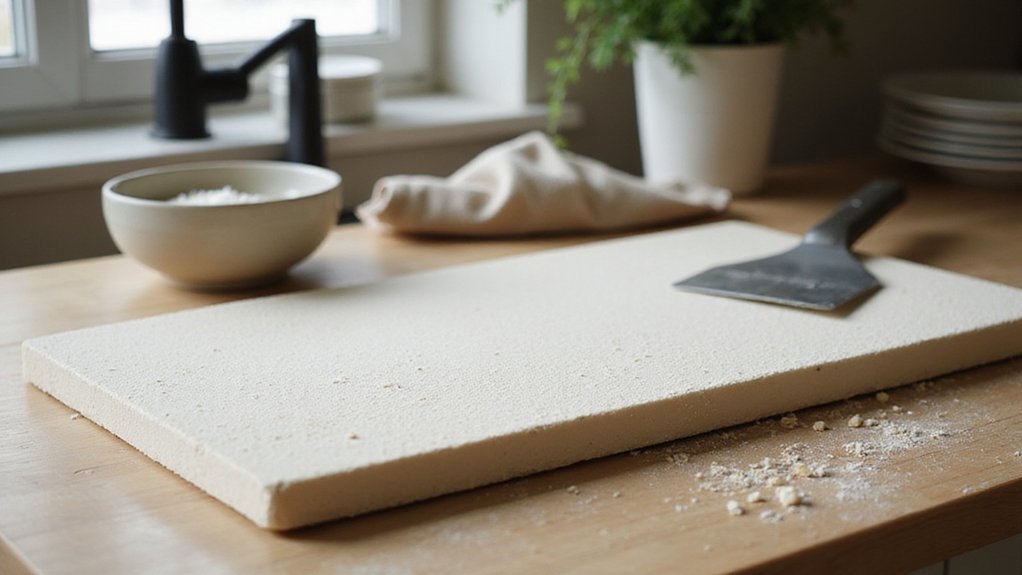
After the cycle completes, allow the stone to cool completely before handling. Handling a hot stone is dangerous and can cause damage. Once it’s cool, use a dry brush to sweep away the ash. Most of the residue should come off easily, leaving a clean surface for your next bake. If stubborn spots remain, flip the stone and repeat the process during your next cook. Remember, no water or soap is needed—just heat and patience do the job.
How to Brush and Wipe Without Damaging the Stone
To avoid damaging the stone, always wait until it has fully cooled before brushing or wiping. When it’s cool, use a stiff, blunt brush or scraper to gently loosen burnt-on debris without gouging the surface. Use back-and-forth motions to dislodge crumbs and ash carefully. After sweeping, wipe the stone dry with a clean cloth or paper towel to remove any remaining dust. This final step ensures a smooth, polished finish and prevents dust buildup. Keep water away from the stone entirely, as moisture seeps into its porous material and can cause cracking during future heating. Use baked-on grease removal tools designed for non-abrasive cleaning to avoid damaging the stone’s surface. A dry-only cleaning method preserves the stone’s integrity and keeps it ready for subsequent uses without risk of damage. Always ensure the stone is thoroughly air dried before storing it to prevent moisture buildup that could compromise its structure. For consistent results, you can also monitor the stone’s surface temperature with a meat probe thermometer to confirm it has fully cooled before you begin the dry cleaning process. Before starting, disconnect the grill from its natural gas source to ensure safe handling while cleaning.
What to Never Use on Your Ooni Stone
You should never use water directly on your Ooni stone. Liquid, soaking, or even running water over it can allow moisture to seep into its porous surface, which may cause the stone to crack during reheating. Chemical cleaners like soap and detergents are also off-limits because they can absorb into the stone and impart unpleasant flavors to your pizzas. Avoid abrasive sponges, metal scourers, and steel wool, as these can scratch the surface or leave behind metal particles that rust over time. Applying oils, butter, or cooking sprays is a bad idea too—they create sticky residues, produce smoke at high temperatures, and may lead to cracking. Lastly, never place a wet or cold stone into a hot oven. The sudden temperature change can cause thermal shock, cracking the stone instantly.
How to Flip the Stone for Stubborn Buildup
To tackle stubborn buildup on your Ooni stone, flipping it over can be an effective method. First, ensure the stone is completely cool to prevent burns. Then, carefully remove it from the oven, turn it over to expose the cleaner side, and place it back in the oven with the dirtier side facing down. You don’t need soap or abrasive scrubbing for this step. Instead, heat your oven to its maximum setting and leave it at that temperature for 30 to 45 minutes. The high heat will turn any residual debris on the previously hidden side into light ash. Once the stone cools again, gently brush away the ash with your Ooni brush. This process is particularly useful for stubborn spots that resist regular scraping, providing a simple way to revitalize your stone without harsh chemicals. Remember, it’s not meant for routine light cleaning but for those persistent buildup issues. Flipping the stone also promotes even burn-off of debris from all sides during routine use after each cook.
Why High Heat (Not Soap) Is All You Need
High heat alone is enough to clean your pizza stone because it carbonizes and burns off stuck-on food residues. Running your Ooni at its maximum temperature for around 30 minutes causes the remaining cheese, sauce, and flour to turn into brittle ash that can be easily brushed or scraped away. Unlike soap, which can leave behind chemical residues that soak into the porous surface, high heat kills lingering contaminants without introducing any chemicals. Once cooled, simply remove the flaky ash, avoiding liquids that could cause thermal shock or taste contamination. This method ensures a thorough clean without risking damage or chemical residue buildup.
Quick Tips for Keeping Your Stone Clean Between Uses
To keep your stone in good shape between uses, follow these quick steps. First, let it cool completely after cooking. Then, gently brush away any loose crumbs and residue with a dry brush—focus on raised bits, not the normal seasoning layer. Next, run your oven at its top temperature for 20 to 30 minutes; this burns off grease and flour into ash. Once cooled, brush away that ash. Flip the stone to expose the underside so it can clean itself during the next preheat cycle. Keep a scraper nearby for stubborn debris, but avoid sharp tools that could gouge the surface. Accept dark marks and buildup as normal; you don’t need to achieve a spotless look. Performing this light cleaning after every use prevents hardened buildup, reduces smoke, and keeps off-flavors at bay. This method leverages the double-sided stone design for extended life and even cleaning.