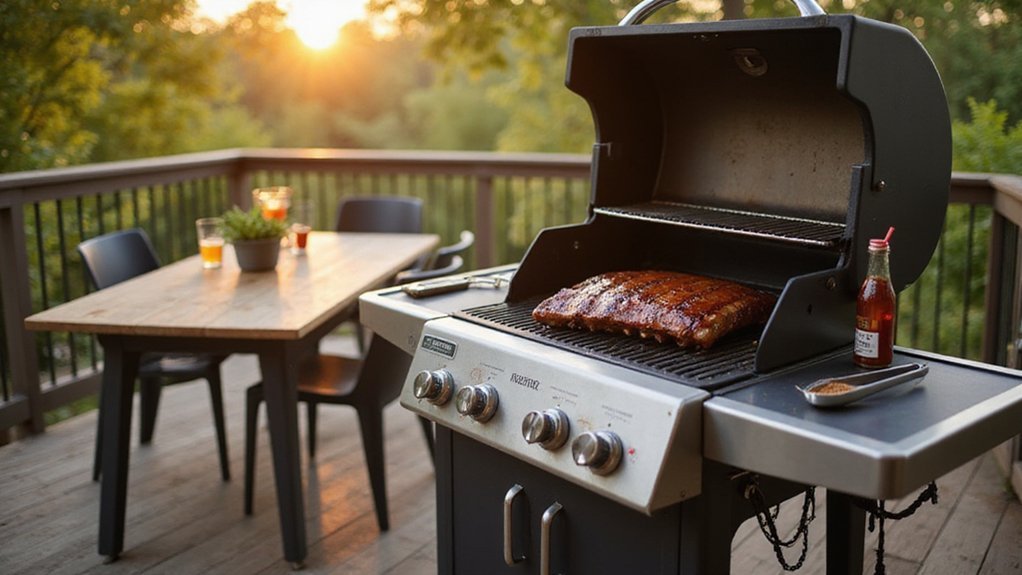
Getting your Traeger pellet smoker up and running smoothly can seem like a lot to handle at first, but once you know the basics, it’s straightforward.
Filling the hopper, igniting the grill, and setting the right temperature are your main steps to start cooking delicious smoked foods.
Proper preheating and maintenance are key to consistent results, and I’ll guide you through everything you need to know.
What You Need Before Your First Traeger Cook
To prepare for your first Traeger cook, start with your fuel. You’ll need hardwood pellets, ideally Traeger brand, to ensure consistent performance. Fill the hopper with enough pellets to last through your cook, but be mindful of pellet storage. Keep your pellets in a dry, sealed container to prevent moisture absorption, which can clog the auger and hinder ignition. Using fresh, dry pellets is essential for proper preheating and maintaining steady temperatures. Unlike countertop ice makers, pellet grills require careful fuel moisture management to avoid mechanical issues. Similarly, when choosing patio gear, covers for your grill should offer robust weather protection to keep components dry. For a safe startup, always keep the lid open during the ignition steps to prevent a dangerous gas buildup. Once your pellets are loaded and stored correctly, plug in the grill and gather your cooking tools, such as a meat probe and foil pan. With everything in place and dry pellets loaded, you’re all set for your first cook.
How to Start Your Traeger Pellet Smoker Step by Step
To start your Traeger pellet smoker, plug it into a grounded outlet and open the lid. Ensure the heat baffle, drip tray, and grates are properly installed. Check that your pellet storage has enough fuel for the cooking session. Turn the power switch ON. For a standard closed-lid startup, set the controller to your desired temperature and hold the IGNITE command until the fan begins to run. You will hear pellets dropping into the firepot, and the grill will reach cooking temperature in about 15 minutes.
If you prefer an open-lid smoke startup, set the controller to SMOKE. Wait approximately five minutes for whitish-gray smoke to appear, then keep the lid open an additional five to ten minutes before closing it. After closing the lid, set your final temperature and allow the grill to preheat for 10 to 15 minutes. Confirm that the controller indicates the grill is ready. Allow a few minutes for the fire to ignite and smoke to start, noting that smoke bellowing from the smoker signifies proper ignition. If the startup does not proceed as expected, perform a shutdown cycle, check the grill’s calibration, and ensure the pellets are feeding correctly. Do not place any food on the grill until it reaches the set temperature. For optimal heat retention and durability, consider the material of your grill grates, as porcelain-coated steel offers a non-stick surface but may chip over time. When grilling pizza, using a pizza stone on the smoker helps to distribute heat evenly and achieve a crisp crust similar to a traditional oven. For those who also enjoy outdoor cooking with gas, a propane fire pit with table can offer a versatile and convenient alternative for gatherings.
Season Your Traeger Before the First Cook
Once your grill reaches and maintains a steady temperature, it’s time to season it before cooking. This initial burn-in helps cure the paint and burns off manufacturing residues that could affect the flavor of your food. Unlike some other types of grills, pellet grill owners benefit from a high-temperature burn-off to clean the cooking grates internally. Set the grill to 350°F with the lid closed and run it for 20 minutes. Then, increase the temperature to 500°F and hold it for 30 minutes. During this process, you’ll observe dark smoke and ash, which is normal. Skipping this step can lead to off-flavors and potential damage to the grill. For proper seasoning, ensure you run the smoker at approximately 480°F for 45 minutes instead. A flat top surface offers a different seasoning method that relies on oil layers rather than heat alone. Using a gas grill instead requires a different heat management approach for cooking delicate proteins.
Ensure your pellet storage keeps the fuel dry and your accessories are clean for best results. After the burn-in, don’t turn off the grill immediately. Instead, initiate the shutdown cycle and let it run for 10 to 15 minutes. Once this process completes, your grill is seasoned and ready for your first cook, giving you a better flavor and longer-lasting equipment.
How Long to Preheat Your Traeger Smoker?
A typical preheat time for your Traeger smoker is 30 to 45 minutes, especially on WiFIRE models during their initial use. Higher temperature settings will shorten this period, but you should always keep the lid closed during preheating to ensure even heat distribution. It’s important not to rush this process—wait until the display shows that the target temperature has been reached and stabilized before cooking. Proper preheating ensures that your food gets smoked evenly and that the smoke flavor develops fully. After about 10 to 15 minutes of reaching the right temperature, you can load your grates and start smoking with confidence. For those who also enjoy griddling, a portable flat top grill can offer a versatile alternative for quick, seared meals. Consider using an infrared thermometer to periodically verify the surface temperature of the grates, as a steady heat distribution is critical for consistent results. When using butcher paper, beginners should remember to wrap the meat tightly to trap moisture while allowing smoke to penetrate.
Best Traeger Temperature Settings for Brisket, Ribs, and Chicken
For brisket, set your Traeger to 225°F. This low and slow temperature allows the meat’s fat and connective tissues to gradually break down, resulting in tender, flavorful results. Maintaining this steady heat ensures the smoke flavor deeply infuses the meat without drying it out. Use visual cues like bone pullback and tenderness rather than relying solely on a thermometer for the final doneness. For those who prefer a gas option, you can also use a natural gas conversion to connect your grill easily. For the best barbecues, choosing a dual-purpose combo can offer both smoking and grilling versatility. Pellet grills are typically more durable in cold weather than gas grills due to their better insulation.
For ribs, 225°F remains your best choice. This temperature promotes even rendering of fat and connective tissue, helping achieve that ideal balance of smoky flavor and moistness. Ribs benefit from prolonged exposure at this temperature—typically 4 to 6 hours—allowing the meat to become tender enough to pull clean from the bone. Trust the visual signs and texture, not just internal temperature, to gauge doneness.
In contrast, chicken requires higher heat to develop crispy skin and ensure safe internal temperatures. Crank your Traeger to between 375°F and 450°F. This range cooks the chicken quickly, crispens the skin, and guarantees an internal temperature of at least 165°F, which is necessary for safety. Lower BBQ temperatures often produce rubbery skin and undercooked meat, so turning up the heat is essential for the best texture and doneness.
How to Maintain a Steady Temperature on Long Smokes
Maintaining a steady temperature on long smokes requires a combination of proper setup and ongoing adjustments. Start by ensuring your grill is clean—an ash-covered firepot restricts airflow, causing temperature swings. Clear out ash after each cook to promote consistent combustion. Use dry Traeger pellets and keep your hopper full; moist fuel or running it low can destabilize the heat. Avoid opening the lid unnecessarily because each lift releases heat and extends the time needed for the temperature to recover. Rely on a leave-in thermometer to monitor your grill’s temperature continuously. Regularly clean your RTD sensor; if temperature readings still fluctuate, consider replacing the probe or controller. Wood pellets are the most common cause of temperature fluctuations, so always store them in a dry place to prevent moisture absorption that reduces grill efficiency. For those serious about consistent results, consider investing in a quality outdoor dining table for placing your prepared meats while monitoring your smoker. Following these steps helps lock in stable, even heat over the entire duration of your smoke. Additionally, keeping the exterior surfaces free of baked-on grease helps prevent airflow blockages that can disrupt temperature stability. For comparable control in other cooking methods, consider how Blackstone gas grills offer high performance with even heat distribution for consistent results.
When to Use Super Smoke Mode for Extra Flavor
Use Super Smoke at the start of low-and-slow cooks between 165°F and 225°F. It provides a richer wood-fired flavor that meat absorbs best during the early hours of smoking. For cuts like brisket, pork butt, or ribs, run Super Smoke for about the first half of the cooking time to infuse flavor without the risk of a bitter aftertaste. After that, switch to regular mode to balance the smoke and prevent over-smoking.
Don’t skip Super Smoke during faster cooks. Begin chicken, salmon, or thick steaks with it to quickly build smoky flavor, then increase the heat to finish with browning or searing. You can also use it throughout the entire fish cook if you desire a bold smoky profile. Keep in mind, Super Smoke isn’t a default setting; it’s best used in a flavor-building phase early on, then turned off for more balanced results. Always confirm proper gas connections and safety before switching between fuel types or propane sources. Regularly clean your smoker’s interior components to prevent grease buildup, much like routine maintenance ensures optimal performance in an ice machine.
Shut Down Your Traeger Safely and Clean It Right
Before you start cleaning, always complete the full shutdown cycle. This process burns off excess pellets and prevents startup problems. First, remove your food from the grill. Then, press and hold the ignite or standby button for three seconds, or use the app if available. Keep the lid closed during this process. Do not unplug the grill early; instead, let the fan run its full cycle. This is a crucial safety step that prevents unburned pellets from causing a backfire.
After high-heat cooking, turn the temperature down to 225°F and hold it there for 10 to 15 minutes before shutting down. This helps clear pellets near the firepot and reduces the risk of buildup. Once the grill has cooled thoroughly, open the lid and remove the grates, drip tray, and heat baffle. Then, vacuum out all ash and unburned pellets from the firepot and interior. Be sure to clean the pellet box as well—doing so now minimizes future startup issues and ash accumulation.