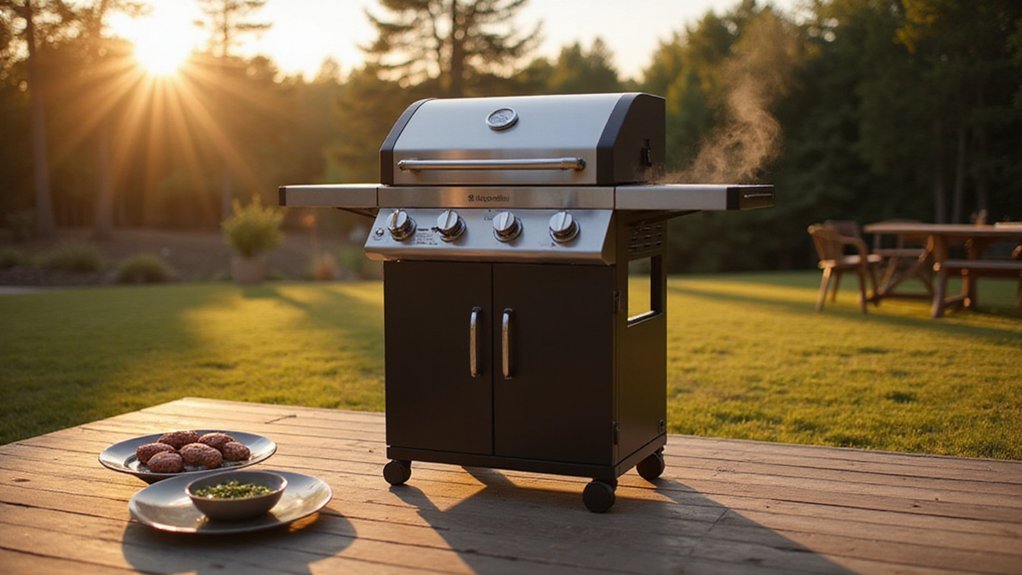
Got rust on your cast iron grill grates and wondered how to get rid of it? There are simple methods to restore their shine.
One way is to heat the grates to loosen the rust. Using household items like baking soda and vinegar can also be effective.
With a little time and effort, your grill can be rust-free and ready for your next cookout.
Keep reading to learn the straightforward steps to clean and maintain your cast iron grill grates.
Start With a 500°F Preheat
Preheating your grill grates to 500°F for 10 to 15 minutes is essential for effectively removing rust. At this high temperature, the metal expands slightly, which helps loosen rust’s grip, making it easier to scrub away. Precise temperature control is critical; a reliable grill thermometer is a must to ensure you reach and maintain 500°F. Lower temperatures won’t create enough expansion, making rust removal significantly harder. For a comparable precision tool, a spring-loaded scoop ensures consistent portion sizes by using a similar mechanical advantage.
Safety is also important—wear thick gloves to protect your hands from the intense heat. This preheat cycle is a targeted step designed specifically to loosen stubborn rust before brushing. While the grates are still hot, immediately scrub them with a wire brush or aluminum foil. Heating first reduces the amount of scraping needed and speed up the process. Afterward, follow up with a quick re-seasoning to protect the freshly exposed metal surface. A similar high-heat approach is used when mastering pizza cooking on a pellet smoker to achieve the ideal crust texture. For a permanent gas connection, professional installation ensures safe and reliable fuel delivery to your grill.
Remove Light Rust With a Baking Soda Paste
To remove light rust, mix 1 cup of baking soda with about 1/3 cup of water, adding the liquid gradually until you form a thick, spreadable paste that sticks to your grates. First, brush off any loose debris and lightly moisten the surface for better adhesion. Use a brush or sponge to coat only the rusted areas thoroughly. Allow the paste to sit for 10 to 15 minutes for mild rust, or up to 30 minutes for moderate rust. This dwell time softens the rust, making it easier to scrub away. Afterward, scrub the rusted spots with a nylon brush or scouring pad until the rust lifts. Rinse thoroughly with hot water, dry immediately, and then apply a thin layer of vegetable oil to protect against future rust. For superior cooking performance, consider upgrading to a grill with Blackstone gas grills that are designed for durable, rust-resistant grates. For a similarly effective gadget in the kitchen, consider countertop ice makers that are reviewed for your needs. This method provides an effective and gentle way to banish light rust without harsh chemicals. The key difference in tool design often comes down to solid versus perforated surfaces, where solid models excel at holding toppings during transport, while perforated ones allow for better airflow and moisture release during cooking.
Soak Stubborn Rust in 50/50 Vinegar Solution
To soak stubborn rust effectively, use a 50/50 white vinegar and water solution. Fill a plastic container large enough to fully submerge the rusty item. This method is a proven alternative rust removal technique. Keep in mind that the vinegar soak should last no longer than one hour to prevent etching the iron. During soaking, visible bubbles will form, indicating the acetic acid is working to dissolve the rust. After 30 to 60 minutes, remove the item and scrub it with a wire brush or steel wool under running water. The rust should loosen easily. For particularly tough spots, opt for a second shorter soak instead of prolonging the initial one. Always rinse thoroughly afterward to remove all residues. Just as leak checks prevent problems in gas fireplace setups, ensuring no vinegar residue remains is critical to avoid future corrosion on the iron. Likewise, using genuine Charbroil parts helps ensure your grill continues to perform reliably after clean restoration.
Dry and Re-Season to Prevent Flash Rust
Drying the grates thoroughly is essential to prevent flash rust from forming within minutes of moisture lingering. After scrubbing off the rust, towel-dry the grates first. Then, place them on a grill or stove on low heat for about 2 to 3 minutes. This heat drives out residual moisture that your towel can’t reach, especially in seams and pores. Once completely dry and slightly cooled, apply a thin layer of oil—vegetable or grapeseed oil works well. Wipe off any excess to leave only a light coating. Finish by heating the grates on high for around 10 minutes to bond the oil to the iron. This step rebuilds the seasoning layer, providing lasting protection and restoring the non-stick surface. For added durability, consider using a top wood pellet grill to reach consistent high heat that helps bond the oil evenly during reseasoning. If you prefer a different style, a flat top grill model with even heat distribution can also effectively prevent uneven oil bonding on cast iron surfaces. Unlike gas alternatives, propane fire pits often produce subtle flavor differences when used near the grill, which can affect how the seasoning oil bonds.
Oil Grates Regularly to Keep Rust Away
To prevent rust from returning, oil your cast iron grill grates regularly after they have dried and re-seasoned. After each cooking session, apply a thin layer of neutral, high-smoke-point oil such as vegetable or canola oil across all surfaces—including the top, bottom, edges, and corners. Use a paper towel to wipe off any excess oil to avoid a sticky surface. Then, heat your grill to 400–500°F for 15–20 minutes, which allows the oil to polymerize and bond to the cast iron. This process strengthens your seasoning layer and enhances rust resistance. For consistent results, always pair this step with refill confidence by using a high-quality gas tank that ensures reliable heat output. Always ensure the grill is turned off and completely cooled before starting any oil application to prevent burns or flare-ups, as safety precautions are critical. Incorporate oiling into your cleaning routine by quickly brushing off food residue before applying the oil. If you won’t be using your grill for an extended period, oil the grates beforehand to create a moisture barrier during storage. Regular inspection is key; if you spot any signs of rust, reapply oil and heat the grates to restore the protective coating. For long-term care, consider pairing this maintenance with a complementary outdoor bistro set to create a polished cooking and dining area. A top outdoor umbrella for your table can also help shield your grill and prep area from the elements, reducing moisture exposure.