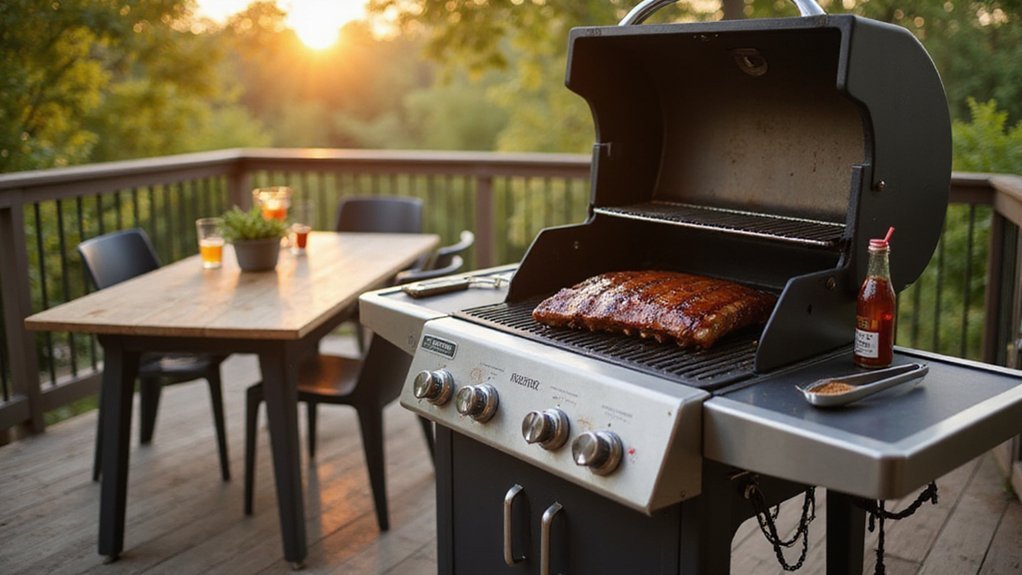
If you’re wondering how to get a perfectly smoked pork loin on your pellet grill, the key is in the temperature, timing, and wood choice.
Keeping your grill between 225 and 250°F and smoking fat-side-up helps achieve juicy, flavorful slices.
Follow these simple steps, and you’ll be able to master a tender, delicious pork loin every time.
How to Set Up Your Pellet Grill for Smoked Pork Loin Without Drying It Out
Preheat your pellet grill to a steady temperature of 225–250°F for optimal low-and-slow smoking that keeps your pork loin juicy. Allow the grill to heat up for 15–20 minutes before placing the meat. Position the loin directly on the grates with the fat side facing up; this helps improve color and provides natural protection during cooking. You don’t need to flip the meat, which minimizes heat loss and simplifies the process. Insert a probe into the thickest part of the loin and remove it from the grill once the internal temperature reaches 145°F to ensure it’s safely cooked yet tender and moist. For initial flavor infusion, start the grill on the smoke setting (~180°F) for about 30 minutes before raising the temperature. For even better results, consider using a portable pizza oven if your pellet grill lacks consistent heat distribution, or you can review how to connect to natural gas for a more reliable fuel source. A countertop ice maker can quickly chill your cooked pork loin for efficient cold storage.
For seasoning, pat the meat dry so the rub adheres well, then apply your blend evenly. Keep a ¼-inch fat cap intact on the loin to prevent drying out, and remove any silver skin for more even coverage and better seasoning absorption. Adjust your cooking approach based on the loin’s thickness, but maintain a consistent low temperature for the best results in juiciness and tenderness.
Best Wood Pellets for Pork Loin: and When to Use Super Smoke
Super Smoke is most effective during the initial phase of smoking at low temperatures. For pork loin, keep its use to about an hour or less. This short burst allows the meat to absorb the smoky flavor without turning bitter. Use Super Smoke after preheating and stabilizing your grill. Since quality pellets burn consistently, stick to dry, hardwood-based options to ensure reliable smoke production and avoid uneven combustion. Overusing Super Smoke can lead to a harsh, bitter taste, so timing it right is key to achieving that perfect balance of smoky flavor. A reliable gas supply, like refill confidence with a quality tank, ensures your fuel source is as dependable as your pellets for consistent heat. For optimal results, consider using a gas grill and smoker combo that allows you to switch between direct heat and smoke-wood settings. Before beginning, checking seals and connections on your kegerator ensures a gas-tight system, similar to verifying your grill setup for safe, consistent performance.
How Long Does It Really Take? Timing by Weight, Thickness, and Heat
Total cook time for smoking a pork loin varies based on weight, thickness, and heat level. For a typical 5-pound roast cooked at 225 to 250°F, expect about 2 to 3 hours. However, thickness influences cook time more than weight alone because thicker loins take longer for heat to reach the center. At 225°F, plan for 2.5 to 3.5 hours; increasing the heat to 250°F speeds up the process. There is also a faster method that takes about 1.5 hours: start with a low smoke setting then bump the temperature to 250°F. Ensuring your grill remains well-maintained provides consistent heat, and choosing the right wood for flavor helps enhance the final result. For optimal moisture retention, consider placement tips for water pans in your pellet smoker to maintain humidity. Always use a probe thermometer to monitor internal temperature; don’t rely solely on time estimates. For a 3.5-pound piece, applying a generous coat of coarse black pepper and sea salt and letting it rest for 20-30 minutes before cooking ensures good seasoning absorption. A top-rated smoker gas grill offers consistent heat control that simplifies managing the cooking environment and enhances overall performance. A natural gas fire pit can provide a steady heat source for outdoor cooking, though it is not typically used for smoking.
Exact Internal Temps to Pull, Rest, and Slice
Pull your pork loin when it reaches an internal temperature of 140–142°F for the juiciest, sliceable results. This target allows carryover cooking during rest, where the internal temperature will rise approximately 5°F, reaching around 145°F. Pulling at this stage ensures the meat remains moist and tender without overcooking. For those who also enjoy seared crusts, infrared gas grills offer powerful, even heat for finishing. Properly cleaning the stone after use prevents the seasoning layer from breaking down, ensuring it remains non-stick over time. A pellet smoker uses wood pellets that provide consistent smoke flavor throughout the cooking process.
After removing the pork, let it rest loosely covered with foil for at least 10 minutes. This rest period lets the juices redistribute throughout the meat, enhancing flavor and moisture. Avoid tightly wrapping the loin, as this can cause steaming and soften the crust. During resting, the internal temperature will climb to the safe and optimal 145°F.
Slice the pork against the grain for tender bites. For firmer, less pink slices, aim for a final temperature around 150°F. Going beyond 155°F increases the risk of dryness and loss of juiciness. Use a reliable thermometer to monitor the thickest part of the loin, and remove it from heat 3–5°F before reaching your desired temp to prevent overshooting. Rest, then slice for the perfect balance of flavor, moisture, and texture.
Why 225°F to 250°F Works Best for Pellet Grill Pork Loin
Smoking a lean cut like pork loin at 225°F to 250°F hits the ideal temperature range to maximize flavor and moisture retention. This range allows you to extend the time the meat spends in the smoker, giving it more opportunity to absorb smoke and develop richness in flavor. It also ensures a slow internal temperature increase, which helps keep the slices juicy and tender. For comparison, rubbing a cut onion on your grill grates can help prevent sticking and add a mild flavor boost, a trick that works well with pellet grill cooking too.
Starting around 225°F for the first 20 to 30 minutes kicks off authentic smoke flavor without risking dryness. After that, maintaining a steady temperature within this range keeps a consistent heat that gently cooks the meat, avoiding the problem of higher temperatures closing the smoke window too quickly or drying out the exterior.
Sticking within 225°F to 250°F effectively balances smoke absorption and moisture retention. This temperature window is the sweet spot for pork loin on a pellet grill, helping you achieve tender, flavorful results every time. For those who prefer cooking on the water, top gas grills for boats offer a similarly reliable performance in marine environments.