If you’re wondering how to keep your pizza stone in good shape and ensure it gives you perfect crusts every time, you’re in the right place. Proper care can extend its life and improve your pizza results, whether it’s new or seasoned.
Mastering a few simple steps will help you care for your stone so it can serve you well for years to come.
Below, you’ll find straightforward tips on cleaning, maintaining, and restoring your pizza stone.
Keep reading to learn how to treat your stone the right way.
Cool the Stone Fully Before Any Cleaning
You must let your pizza stone cool completely before cleaning it. A hot stone cannot safely handle sudden temperature changes, and exposing it to water or a damp cloth risks thermal shock. Rapid cooling from hot to cold can cause the porous structure to crack or even make the stone break apart. To prevent damage, wait at least one to three hours, depending on the thickness of your stone. Placing it in a turned-off oven or on a wire rack allows for even airflow and cooling. Do not rely solely on touch; ensure the stone is at room temperature, ideally below 100°F, before you start cleaning. Patience here protects your stone from damage and ensures it lasts longer. A proper cooling method mirrors the safe natural gas connections that prevent appliance damage from abrupt temperature shifts. For additional kitchen countertop appliances, many buyers prioritize durability by selecting models with stainless steel construction that resists thermal stress and wear.
Remove Loose Debris From Your Pizza Stone Without Scratching
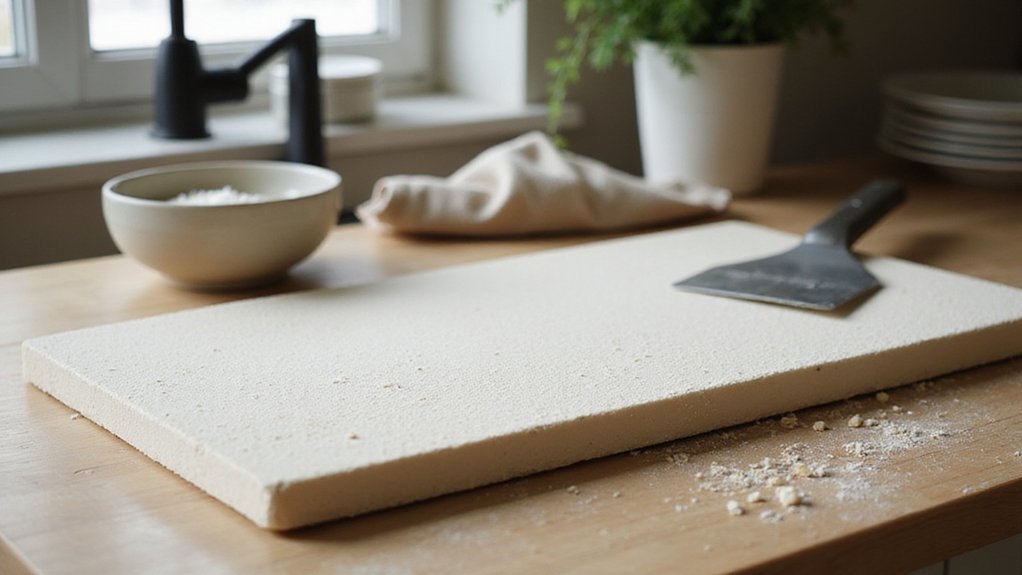
Once your pizza stone has cooled completely, start by sweeping away loose crumbs with a stiff-bristle brush. Use a gentle back-and-forth motion to lift ash and lightly carbonized bits without scratching the surface. For stubborn residue, switch to a non-metal scraper made of plastic or wood—applying gentle pressure prevents gouging. Avoid abrasive tools like metal scrapers or harsh scouring pads, as they can damage the porous surface. Finish by wiping with a dry cloth to pick up any remaining fine dust. Choose cleaning tools that are firm yet gentle, prioritizing nylon bristles over aggressive wire brushes. Regular cleaning of the stone reduces fire hazards from burnt flour or semolina that can ignite more easily in humid conditions. This dry-only method effectively removes debris without pushing it deeper into the stone, helping to preserve its surface for your next bake. For deeply embedded grease, a paste of baking soda and water left to sit can lift baked-on grease without the need for liquid soaking, which can weaken the stone’s structure over time. A similar approach works well for grill grates, where a firm nylon brush prevents surface damage while removing carbonized residue efficiently. For moving your pizza onto the prepared stone, selecting the best pizza peels ensures a smooth transfer without disturbing the crust.
Use Water Sparingly: and Only After Full Cooling
Keep water use infrequent and only after your pizza stone has fully cooled. Allow at least two hours for the stone to reach room temperature before considering any cleaning with water. When you do need to wipe it, use a barely damp cloth—never a soaking one. Water is porous and can seep into the stone, which may cause it to crack due to thermal shock if introduced too soon or too roughly. Excess moisture requires a 24-hour drying period before the stone can be used again. Scrape off loose debris first; if necessary, a brief, controlled wipe will suffice. Avoid soaking, running, or submerging the stone in water altogether. Standing water can cause cracks, lead to flavor absorption, and extend downtime. Treat water as a sparing helper for cleaning rather than a primary method, helping you preserve your stone’s integrity over many baking sessions.
Skip Soap and Harsh Cleaners to Preserve the Stone’s Flavor
Soap should be avoided entirely when cleaning a pizza stone. Its porous surface absorbs residues, including soap, which can transfer a soapy flavor to your next pizza. Commercial cleaners and detergents contain chemicals that can leach into the stone and compromise its natural flavor, so skipping these options keeps your crust tasting authentic. For odor removal, dry heat is sufficient and effective. Mechanical cleaning with a stiff brush or plastic scraper helps remove debris without damaging the stone’s seasoning. Keep the stone dry at all times, as excess water can cause cracking. A simple, soap-free routine preserves your pizza stone’s natural nonstick properties and ensures it remains in optimal condition for delicious results. To prevent stains and buildup, placing parchment paper under the pizza before baking helps keep the stone looking new. For those who also enjoy outdoor cooking, a flat top grill offers a similarly versatile, high-heat surface that benefits from the same gentle, scraper-based maintenance approach. For backyard gatherings, a propane fire pit with a table provides a comparable heat-resistant surface that requires only gentle cleaning to maintain its performance.
Fix Burned-On Stains With Baking Soda or a Hot Oven Burn-Off
Burned-on stains that remain after scraping can be effectively removed using either a baking soda paste or a high-heat oven burn-off. The type of stain determines which method works best. For blackened spots, mix equal parts baking soda and water to form a paste. Apply this paste directly onto the stain, let it sit for 15 to 20 minutes, then gently scrub with a non-abrasive pad to lift the residue. For thicker buildup or more stubborn stains, opt for the burn-off method. Place your stone in a cold oven, then heat it to 500°F and maintain that temperature for 30 to 60 minutes. If the buildup is especially heavy, a second 60-minute cycle may be necessary. After the oven cools completely, use a scraper or non-abrasive pad to remove the carbonized debris. This burn-off technique is effective for all types of residue, and it mimics the natural process where food burns off during regular oven operation to maintain both sides of the stone. To maintain your stone’s surface, perform this deep cleaning only when visible stains have accumulated, and avoid harsh tools that could scratch the surface. Never expose a hot stone to cold water, as thermal shock can cause it to crack. For steel versions, a thin application of oil before seasoning helps prevent rust and creates a non-stick surface over time. For those who prefer outdoor cooking, combining your stone care with a gas grill and smoker setup can offer consistent heating for pizza and barbecue alike. Choosing a high-quality baking stone helps ensure even heat distribution and prevents future stubborn stains.
Dry and Store Your Stone Bone-Dry to Prevent Cracks
Dry your stone thoroughly before storing it. This prevents trapped moisture from causing cracks or mold growth. Air-drying takes between one hour and 48 hours, depending on how much water the stone absorbed. Place it in a well-ventilated area to speed up evaporation. Never put a damp stone directly into a hot oven, as thermal shock can crack it instantly. For optimal moisture management, keep your stone in a dry, stable room temperature spot, away from humid areas like basements or under-sink cabinets. When storing long-term, avoid stacking heavy cookware on top. Instead, lay it flat on an oven rack or shelf, but always be aware of its location before preheating. Ensuring the stone is completely dry helps prevent mold and guarantees a perfect crust on your next pizza. For a more forgiving surface that handles moisture differently, consider how consistent heat distribution in high-performance grills like Blackstone models affects cooking outcomes. If you are building a permanent outdoor setup, a wood-fired pizza oven offers superior heat retention and a distinct smoky flavor that a pizza stone cannot replicate. For instance, using propane on a natural gas grill poses serious risks including improper combustion and potential gas leaks.