If you’re wondering how to keep yourself safe while grilling with propane, there are key steps you need to follow.
From proper setup to safe handling of cylinders, these tips help prevent accidents and ensure a worry-free barbecue experience.
Once you understand the basics, you can enjoy your cookouts with confidence.
Keep reading to get all the essential safety advice you need.
Set up Your Propane Grill Away From the House
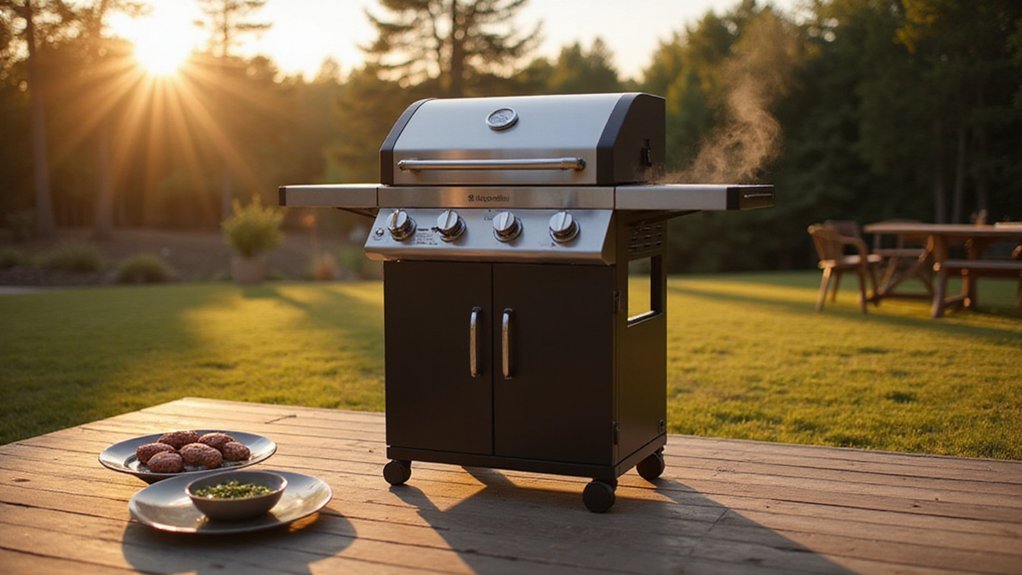
To keep your propane grill safe, set it up at least 10 feet away from your house, garage, or any structure. This distance helps prevent heat transfer and reduces fire risk. Always follow local fire codes and manufacturer instructions, as they take precedence over general advice. Proper grill positioning means avoiding overhanging branches, eaves, or awnings, which can catch fire or block ventilation.
Never place your grill on a covered porch, balcony, or inside a garage. These enclosed spaces trap heat and vapors, significantly increasing the chance of fire or explosion. Ensure there is enough clearance for both overhead and side obstructions, meeting the recommended distances specified by the manufacturer. An open, outdoor location with good airflow is essential for safe grilling. For converting to a permanent fuel source, you would need to follow specific natural gas conversion steps to ensure proper connection.
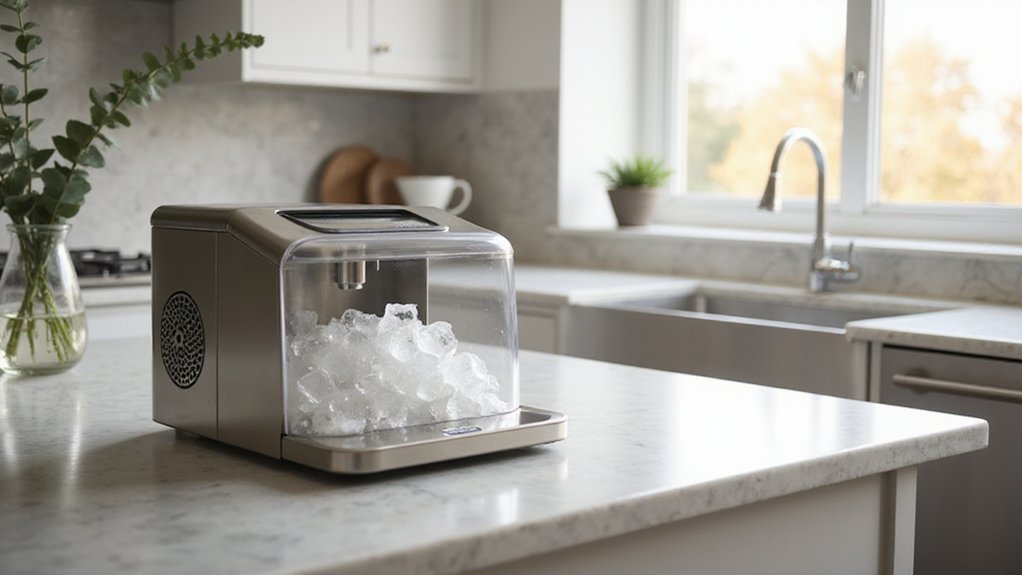
Choose a stable, non-combustible surface such as concrete or stone to prevent tipping or sinking. Keep the grill away from siding, railings, and planters, which can be damaged or become fire hazards. Proper placement helps prevent trapped heat, which can elevate ignition risk and cause unsafe conditions during use. Remember, good ventilation and proper distance are key to safe grilling. For additional convenience, consider a countertop ice maker if you need a portable cooling solution for drinks. A key step in mastering your technique is to allow the steak to rest for several minutes after grilling, which helps redistribute juices for a perfectly tender result.
Store Propane Cylinders Upright and Outdoors
You should always store propane cylinders upright and outdoors. Keeping them upright ensures the pressure relief valve functions properly, which helps prevent liquid gas leaks and reduces the risk of fire. It’s equally important to store cylinders outside because propane is heavier than air and can pool near the ground, especially in confined spaces, creating a dangerous situation. Proper storage can also help protect your outdoor umbrella for table from accidental damage during grilling sessions.
Make sure all valves are tightly closed before storage, and secure the cylinder to prevent tipping or falling. Keep the cylinder away from open flames, sparks, heat sources, or electrical equipment. Place it on a dry, stable surface protected from direct sunlight, rain, and moisture to prevent rust and corrosion. For reference, high-quality nugget ice makers often prioritize top picks on quality, performance, and value to help buyers choose. Never leave a cylinder loose or unattended on uneven ground, as this increases the chance of accidents. Following these storage practices keeps your outdoor grilling safe and disaster-free.
Check Your Propane Grill for Leaks Before Lighting
To check your propane grill for leaks before lighting, perform a soap-and-water test to ensure safety. First, open the propane tank valve to pressurize the system. Then, apply a 50/50 mixture of dish soap and water to the connections: the tank-to-regulator connection, the regulator outlet, the entire hose, and all burner fittings. Watch closely for bubbling—growing bubbles indicate a leak that needs attention. This test is crucial after each use to maintain ongoing safety. For best results, start with a high-quality gas grill that uses durable materials to minimize the chance of connection failures.
If you see bubbles forming, shut off the tank valve immediately. Tighten the connection and perform the leak test again. Persistent bubbles mean the part may be faulty or damaged; in that case, replace the component or keep the grill out of service until a professional inspects it. Conducting this quick, simple test before each use helps prevent potential fires or explosions caused by gas leaks. For added assurance, consider a gas grill and smoker combo that features high-quality connections to reduce leak risks.
Ignite Your Gas Grill Safely Every Time
Opening the lid before turning on the gas is essential for safe ignition. This prevents propane from being trapped inside the grill, which could cause a dangerous flare-up when ignited. Always ensure all control knobs are off before opening the cylinder valve slowly to avoid any unexpected gas release. Drip trays collect grease and food debris, reducing the risk of flare-ups that can occur during cooking.
Follow your manufacturer’s lighting instructions carefully. Use the built-in igniter if available, or a long match through the access port to light the burner. Keep your face and hands away from the burner at all times to avoid burns. If the burner does not light immediately, turn off the gas, keep the lid open, and wait at least five minutes to allow any accumulated gas to disperse. Never repeatedly click the igniter with the gas on, as this can cause flashbacks or explosions.
Waiting before retrying the lighting prevents dangerous flashbacks. Consistently following these safety steps each time you ignite your grill ensures safe operation and reduces risk of accidents.
Prevent Flare-Ups and Never Leave the Grill Unattended
Flare-ups can happen in seconds, so never leave the grill unattended once it’s lit. Managing these flare-ups requires constant supervision and quick action. Grease and fat buildup on your grates and trays are the main triggers, so make sure to clean them thoroughly after each use. Trim visible fat from meat beforehand and oil the food rather than the grates to minimize drips that cause flames. Do not overcrowd the grill, as this increases the risk of flare-ups. If flames ignite, move the food to a cooler zone or close the lid to cut off oxygen supply and starve the fire. Keep children and pets at least three feet away to prevent distractions and accidental contact. While small flare-ups are common and manageable, continuous monitoring is your best defense against larger fires.
Shut Down and Cool the Grill Completely After Use
After you finish cooking and the flames are out, turn off the propane valve at the tank first. This stops the gas flow at the source and allows any remaining fuel in the hose to safely burn off through the burners, ensuring proper gas dissipation and preventing trapped propane in the line. Next, turn the burner controls to the off position. Keep the grill lid open to help reduce heat, as it remains hot for at least an hour. Do not cover the grill until it is fully cooled. Use this cooling time to clean the grates and remove grease buildup, which helps prevent flare-ups during future use. Allowing the grill to cool completely also makes it safer to inspect and maintain without the risk of burns or fire. Once the grill is cool, you can also apply baked-on grease removal techniques to the grill cover to prevent damage. For future disconnections, always follow the proper safety checks before reattaching the tank.
Secure the Grill and Cylinder Between Uses
After you’ve shut down and cooled the grill, secure the propane cylinder upright and keep the whole setup outside in a well-ventilated area. Never store it in a garage, shed, or enclosed space since propane is heavier than air and a leak in an enclosed space could cause a serious explosion. To maintain cylinder stability, place it on level, sturdy ground and keep it upright—never lay it on its side. Always close the cylinder valve and burner controls completely between uses to prevent unintentional gas release. Protect hose-end fittings and burner intakes by covering them with caps or bags, which block dirt, insects, and moisture from contaminating the fuel pathway. Keep the grill and tank accessible for quick inspection and ensure children cannot reach the setup. Avoid storing a spare cylinder under or near the grill to minimize accidental damage or leaks. Regularly inspect the burner tubes and grease traps with a durable grill brush to remove debris that could obstruct gas flow and cause flare-ups. For accurate temperature checks, always use a properly calibrated infrared thermometer to verify the grill’s surface heat before cooking. Ensuring the grill sits on a level, stable surface also reduces strain on the frame and connections, as you would with a custom-built kitchen frame designed to withstand outdoor conditions.
Store Your Propane Grill for Winter or Long Gaps
Before storing your propane grill for winter or an extended period, give it a complete clean and dry it thoroughly. Burn off any remaining residue by running the grill on high for 15 minutes, then scrub the grates and lid with a grill brush or sponge. Empty the grease tray to prevent overflow and pest attraction. Wipe down all exterior surfaces with a mild detergent and dry completely to prevent rust. Coat all metal parts with a light layer of cooking oil to repel moisture, and re-season the grates for added protection. Be sure to use a top-rated brush to avoid leaving bristles behind on the grates. Just as you would regularly clean your countertop ice maker to prevent mineral buildup, maintaining a clean grill surface prevents residue from attracting pests during storage. For added comfort during your outdoor cooking routine, consider comparing cushioned rocking chairs for a relaxed seating option.
For indoor storage, disconnect the propane tank and keep it outdoors in a well-ventilated, upright position. Never store tanks inside your home. Remove the burners and wrap them in plastic to prevent pests from nesting. Seal the gas-line opening with a plastic bag or tape to keep out insects and spiders. Always remove batteries from the ignition system to avoid corrosion. If you plan to store the grill outdoors, use a weather-resistant cover. Elevate the grill off the ground to prevent exposure to snow and standing water, which can cause rust.