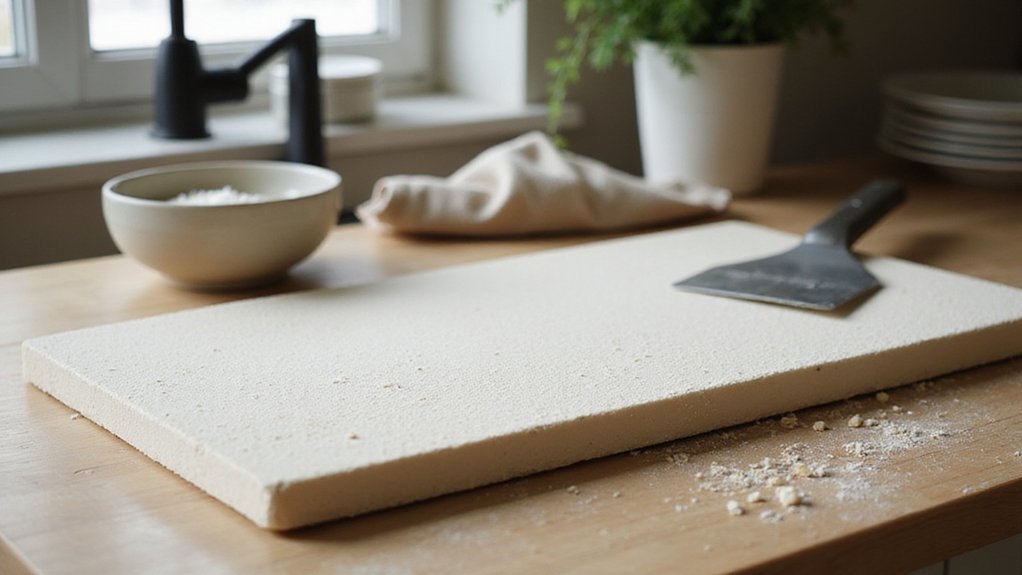
Wondering how long to preheat your pizza stone for the best crust? Typically, about 45 minutes at 500°F to 550°F is ideal.
This ensures the stone heats evenly and reaches the right temperature for a crisp, evenly browned crust. Rushing the process can leave the center cool and ruin your pizza.
Keep reading for the full details.
Why Pizza Stone Preheat Time Makes or Breaks Your Crust
Preheating your pizza stone for at least 30 to 60 minutes is essential. During this time, the stone’s thermal mass absorbs and evenly distributes heat, creating a hot surface that promotes a crisp, blistered crust. Rushing this process leaves the stone cool, which results in a pale, soggy base because the dough doesn’t experience the high, consistent temperature needed for proper Maillard browning and oven spring. Similar to bistro sets, which rely on their material to retain heat for outdoor dining, a pizza stone’s effectiveness depends entirely on its ability to hold and radiate that stored energy. Without thorough preheating, the stone’s surface may form light surface rust if moisture is present, degrading its performance over time. Proper preheating also prevents accidental cracking by allowing the stone to expand slowly and evenly.
Shortening the preheat time compromises the stone’s durability as well. Rapid temperature swings can induce cracking, reducing its lifespan. Additionally, insufficient soak time prevents the stone from fully saturating with heat, impairing oven recovery after you load a cold pizza. This leads to uneven browning and a weak underside, since the stone’s energy isn’t fully stabilized for immediate, consistent heat transfer. Waiting the full 30 to 60 minutes ensures the stone reaches and maintains an ideal temperature, delivering reliable, intense heat from the moment your dough touches down.
How Long to Preheat a Pizza Stone: The 45-Minute Sweet Spot
Preheat your pizza stone for 45 minutes for the best results. This duration allows the stone’s thermal mass to heat soak evenly, ensuring a crisp crust and properly melted cheese. While 30 minutes might suffice in a pinch, it’s often not enough for the stone to reach its optimal temperature. Relying solely on an oven thermometer isn’t enough; the stone needs that extra time to achieve full heat saturation. If you place dough on a cooler surface, you risk a soggy center and uneven cooking. Unlike the heavy-duty butcher paper used for smoking brisket, a pizza stone requires a different kind of heat management to function properly.
The 45-minute window is supported by sources like Food Network and KitchenAid, which note that an additional half-hour after the oven reaches its set temperature typically hits this ideal timing. The material and thickness of your stone influence how long it takes to heat. Still, 45 minutes generally strikes the right balance, reducing underheating risks while avoiding unnecessary waiting. This step ensures your crust is consistently crisp and your cheese melts perfectly without burning. For an outdoor grill, pairing this careful preheating with gas grill accessories can further improve your overall cooking results. For a direct connection, you will need to convert your grill properly before first use.
What Temperature Should Your Oven Be for a Pizza Stone?
Set your oven to the highest practical setting—typically between 500°F and 550°F (260°C to 290°C)—to get optimal results with your pizza stone. This high temperature is crucial because it directly influences your crust’s texture, helping you achieve a crisp bottom that can support a light, airy crumb. It also ensures your cheese melts evenly without burning before the crust is fully cooked. For Neapolitan-style results, the stone temperature should ideally exceed 900°F to create proper color and doneness on the crust. While you wait for the stone to heat, consider how your countertop ice maker can keep drinks cold during your pizza night, ensuring every slice is paired with a refreshingly chilled beverage. Using a reliable gas tank for your grill can also help maintain consistent heat for outdoor pizza cooking.
Can You Preheat a Pizza Stone in 30 Minutes or Less?
Preheating a pizza stone in 30 minutes is possible but not ideal for most results. Many manufacturers, including KitchenAid and Napoleon, recommend at least 30 minutes of preheating time. Typically, 30 to 45 minutes is necessary for reliable and even heating. When you preheat the stone for 30 minutes, it works best if you put a cold stone into a cold oven and then set the temperature to 500°F. Thinner stones heat faster, which can help reduce preheat time and improve compatibility with your oven. However, rushing the process can lead to uneven heat distribution. Signs that 30 minutes wasn’t enough include pale crusts or dough that sticks. For consistent results, a longer preheat time is generally better, but with careful attention, 30 minutes can sometimes suffice. Those who enjoy outdoor cooking might consider gas grill and smoker combos for achieving similar heat retention and versatility. For those who struggle with preheating, using a machine cleaner can help maintain your oven’s heat efficiency. For outdoor enthusiasts, infrared technology offers superior heat retention that rivals a well-preheated stone.
When 60 Minutes of Preheat Beats a Shorter Heat-Soak
A 60-minute preheat is much more effective than a shorter heat-soak period for achieving a crispy, well-browned crust. When you preheat your pizza stone for a full hour, it reaches full thermal equilibrium, often hitting around 509°F. In contrast, a 45-minute soak may only get the stone up to about 451°F. This deeper heat penetration ensures the stone can store enough energy to sear the dough instantly when loaded, supporting better browning and stronger oven spring.
With a longer preheat, the stone’s surface and interior heat evenly distribute, minimizing the cooling effect when cold dough is placed on it. This results in a crust that is tender inside but crisply browned outside, rather than a decent but less impressive result from shorter preheats. America’s Test Kitchen confirms that extending the preheat time dramatically improves the overall baking performance of pizza. For the best thin-crust pizza, giving your stone the full hour leads to superior crust crispness and even baking. This principle mirrors how flat top griddles for grill enthusiasts require adequate preheating to achieve even heat distribution and perfect searing.
Does Your Oven Type Change Pizza Stone Preheat Time?
The type of oven you use does slightly influence the preheat time of your pizza stone, but the differences are not drastic. In a gas oven, plan for a preheat period of about 30 to 60 minutes. The fuel source doesn’t significantly change how long the stone needs to thoroughly heat and soak. Meanwhile, an electric oven typically requires 45 to 60 minutes because the oven’s surface temperature and the stone’s internal temperature can differ, causing the stone to lag behind the oven’s “hot” indicator. For grilling, a preheat time of about 30 to 45 minutes is recommended, but you should also check the surface heat directly with a thermometer. When using a gas grill, ensure your stone is placed on a sturdy support surface to prevent cracking during the heating process. Across all oven types, the key factor is consistent heat distribution rather than the appliance itself; avoid opening the door during preheating to prevent temperature drops and disruption of the heat saturation process. For perfect bakes, always place the stone on a lower rack to ensure it receives consistent heat distribution from the oven’s heating elements. Ensure your pizza stone is positioned on a heat-resistant surface similar to a durable outdoor dining set to withstand prolonged high temperatures.
How Stone Thickness and Material Affect Preheat Duration
Stone thickness and material significantly influence preheat duration. Thinner stones, around ¼ inch thick, typically require only about 30 minutes to reach optimal temperature. In contrast, a 1-inch-thick stone can need a full hour or more. Thicker stones absorb more energy due to their increased thermal mass, which delays reaching the desired heat but provides better heat retention during baking.
Material also plays a role: cordierite heats faster than ceramic because of its higher thermal conductivity. Ceramic stones take longer to preheat but maintain heat more effectively once hot. Alternative heating methods like using a broiler can accelerate surface heating but do not eliminate the need for a thorough soak. Generally, a ½-inch stone reaches baking temperature in roughly 45 minutes, but you should adjust your preheat time based on the stone’s specific thickness and material to ensure consistent results. For those who also cook outdoors, this same principle of managing heat distribution applies when choosing a grill with even heat retention across its cooking surface, ensuring consistent results whether baking or searing.
Signs Your Pizza Stone Is Fully Preheated (No Thermometer Needed)
Your pizza stone is fully preheated when surface cues alone can be deceptive, so rely instead on a combination of signs. First, check the stone surface for a dry, matte finish with no moisture spots, and look for a uniform heat shimmer at an angle. Next, drop a few water droplets on the center of the stone; they should evaporate instantly with a sharp sizzle—lingering droplets or slow beads indicate it’s not yet ready. A light dusting of flour should sizzle and brown immediately upon contact, rather than sitting or slowly browning. Additionally, hold your hand about six inches above the surface: if you feel strong radiant heat, the thermal mass is charged. Observe your oven airflow—if you notice uniform shimmering without cool patches, your oven is evenly heating. However, surface cues can sometimes be misleading because oven air heats faster than the stone itself. The best indicator is when the stone consistently feels hot from edge to center, confirming it has reached the necessary temperature for baking a perfect pizza. For insight into similar material safety, note that butcher paper cannot withstand the high direct heat of an oven and is better suited to low-temperature smoking or wrapping. This principle of even heat penetration is similar to preheating the grill thoroughly to ensure a uniform sear across the entire steak surface. For those using a grill, consistent heat across the entire grate is essential, much like the Weber Spirit gas grills require even heat distribution for optimal cooking results.
What Happens When You Skip Pizza Stone Preheat Time
Skipping preheating your pizza stone leads to a host of problems. Without a properly heated stone, your crust is likely to become soggy, unevenly baked, and limp. The cold surface cannot vaporize the moisture from the dough quickly enough, resulting in a pale, soft bottom. Toppings are at risk of burning while the base remains undercooked, which hampers the development of a flavorful, browned, and charred crust. Using a top-rated Traeger stone ensures the material is optimized for the grill’s heat distribution and thermal retention.
Additionally, placing a cold stone into a hot oven can cause thermal shock. This sudden temperature change may crack the ceramic or fireclay material of the stone, damaging it and reducing its lifespan. Without preheating, your overall bake time extends—some sources indicate an increase of up to 38 percent—which means less oven spring and a denser, less airy crust. Skipping preheating not only affects your pizza quality but also jeopardizes your stone’s durability.
How to Shorten Preheat Without Ruining Your Crust
Preheating your oven for 30 to 45 minutes at 500–550°F can save time while still protecting your crust’s quality. To do this effectively, place your baking stone on the lowest rack in a cold oven to prevent thermal shock. A baking steel heats faster than stone, often taking only 30 to 45 minutes to reach temperature. For stones, avoid shortening the preheat time below 30 minutes; doing so risks a warm top but cold center, which hampers proper bottom browning. Use an infrared thermometer to verify that the stone’s surface reaches approximately 480°F before baking. Keep in mind that oven air temperature can lag by about 110°F, so if you see a difference of more than 15°F between the thermometer and your target, rotate the stone and wait five more minutes before baking. This approach helps you cut down preheat time without compromising on crust quality.